A business door never inconveniences just one person. The opening employee is outside. Two coworkers are behind them. A delivery driver has started checking the time. Somebody calls the manager, who asks the question everyone has already asked: "Did you try pulling it toward you?"
They did.
For more than 20 years, Dave's Locksmith Services has handled commercial locksmith work for Philadelphia businesses and property managers. Storefronts, offices, service entrances, and shared buildings do not use their doors in the same way. The hardware has to fit the traffic, the people carrying keys, and what happens at opening or closing.
A shop can have a good cylinder and a front door that still refuses to cooperate. The closer may pull too hard. The latch may miss unless the door is held against the frame. Hinges can loosen under years of use. By the time somebody calls, every employee knows the workaround but nobody remembers when it began.
This is common with busy entrances. A Frankford Avenue storefront may open and close hundreds of times each week. A Center City office entrance may have building rules, a front desk, and several access points before the company's door. A restaurant in South Philadelphia has customers at the front, deliveries at the rear, and very little patience for a lock that behaves differently every afternoon.
That sentence points past the key itself. Something inside may have disconnected, worn out, or stopped pulling the latch far enough. On another door, the lock may be fine and the latch simply does not meet the strike anymore. The symptom sounds similar from the sidewalk. The repair is not.
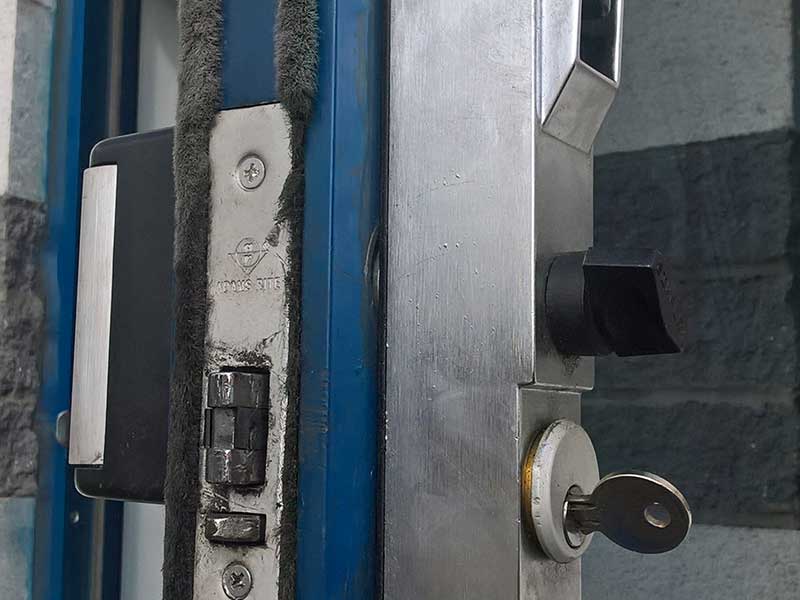
Commercial door hardware works as a group. Cylinder, mortise body, latch, strike, hinges, closer, frame, and panic hardware all affect the opening. Replacing one part alone can leave a new lock fighting the same old door.
Heavy use also changes what "good enough" means. A home lock may be used a few times a day. A business entrance can see that much traffic before breakfast. Loose hardware, a dragging door, or a closer that slams is not a harmless personality trait for long.
Key control gets complicated quietly. A small company begins with three keys. Years pass. Employees change, contractors come and go, one key is copied at lunch, and the manager's ring begins to look like it belongs to a custodian in an old movie.
Before discussing a master key system or changing cylinders, it helps to map the building in plain terms:
The point is not to give everybody more keys. It is to give each person the access the job requires without creating a confusing ring of nearly identical metal.
Replacing every lock may not be necessary. When the existing commercial hardware is serviceable, selected cylinders can often be rekeyed so the former keys stop working. The new key plan depends on which doors the missing key opened and who still needs access.
A single exterior key creates one problem. A master or sub-master key changes the size of the problem because it may open several areas. That is why "we lost a key" needs another sentence. Which key? What did it open? Was it labeled with the business name or address? Those details decide whether one cylinder changes or the plan reaches farther into the building.
Keys should be accounted for without turning the process into office theater. Keep a basic record of who receives one. Mark returns when staff leave. Do not label a key with enough information to lead a stranger directly to the matching door. Simple habits do most of the work.
Panic hardware is meant to release an exit through a push, not a shoulder charge. If an exit bar sticks, the latch does not retract cleanly, or the door fails to close afterward, the complete opening needs attention. Dirt, alignment, worn parts, and pressure from the closer can all change how it behaves.
This is not hardware to ignore because somebody found the exact spot that works. Public and employee exits need to operate consistently. We can inspect the lock-related problem and explain what is happening. Fire and occupancy requirements may also affect which hardware belongs on the door, so changes should match the property's applicable rules rather than a generic replacement picked for appearance.
Storefront glass doors bring different limits. Narrow frames, concealed hardware, older pivots, and years of adjustment leave less room for guesswork. A cylinder may be replaceable while the sagging door still needs separate attention. The two issues can share an entrance without sharing a repair.
This is a commercial lock emergency even though nobody is locked out. Inventory, equipment, records, and the property itself may be behind a door that will not stay locked. The useful description is not only "the lock is broken". Does the key turn? Does the latch move? Can the door be pulled shut? Did a closer or hinge begin making noise earlier in the day?
Authorization still matters after hours. A manager, owner, tenant representative, or property contact may need to confirm that the caller can approve access or changes. A business card and a confident voice are not enough by themselves. Responsible commercial locksmith work includes checking who has the right to make the decision.
Some commercial problems need immediate attention. Others are easier to handle before opening, after closing, or in stages. Rekeying a small office is different from changing a building-wide key plan. Replacing one failed cylinder is not the same as working through several doors that have been neglected for years.
Photos help with early planning. Show the complete door as well as the lock. Include the frame, hinges, closer, and any exit hardware when relevant. For multiple doors, a simple note about where each one leads can prevent the front entrance and rear service door from becoming "door one" and "the other door" halfway through the conversation.
Cost follows the actual scope: the hardware, number of doors, keying plan, condition of the openings, required parts, and timing. Ask what an estimate includes. If an inspection uncovers damage that changes the work, the reason should be explained before the scope changes.
A business searching for a locksmith near me may be managing a Frankford Avenue storefront, a Center City office, a South Philadelphia restaurant, or a mixed-use property in Northeast Philadelphia. Dave's Locksmith Services does not need a polished hardware report. Start with who is waiting, which door is involved, and the workaround everybody has been using.
Especially the workaround. It has probably been keeping notes for us.